
World
World
24 Jan, 2026
Western Alliance Faces Historic Rift as Europe Questions US Commitment
Basilia Magsaysay
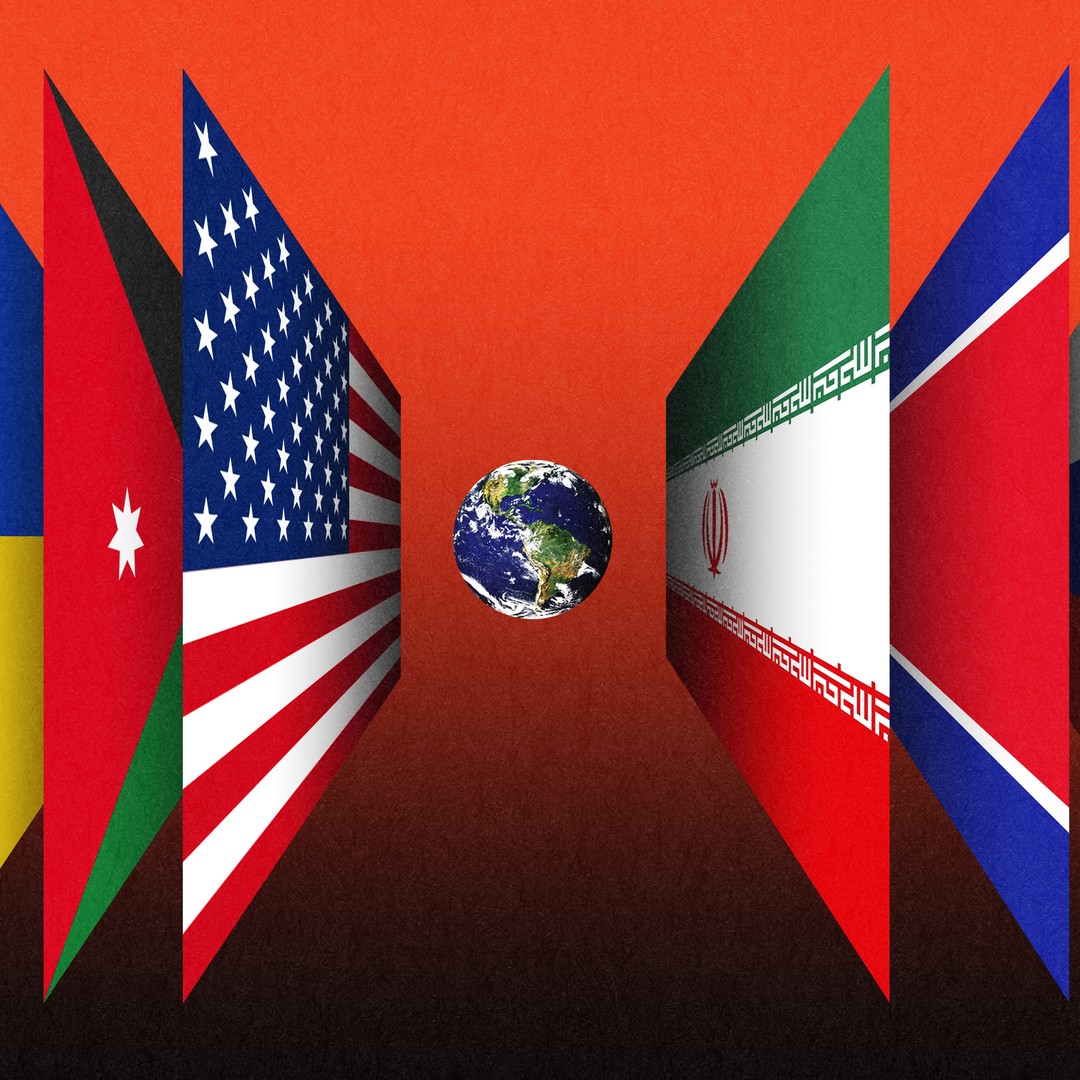
For nearly eight decades, the alliance between the United States and Europe has been the cornerstone of the post-World War II global order, built on shared values of democracy, freedom, and mutual security. This alliance not only deterred large-scale conflicts and defeated communism but also provided a foundation for significant economic growth.
However, by 2025, this partnership is showing visible signs of strain. European leaders have moved beyond apprehension and are now openly questioning the existence and future of the Western alliance as they have known it.
From Solidarity to Suspicion
German Chancellor Friedrich Merz recently remarked, "What we once called the normative West no longer exists," urging Germans to abandon nostalgia for a United States that previously regarded Europe as a strategic and moral equal. He criticized Washington for aggressively pursuing its own interests and encouraged Europe to adopt a similarly assertive stance.
This skepticism is widespread among European officials amid concerns that the US, under President Donald Trump’s second term, is deprioritizing Europe in its global strategy. White House rhetoric toward European democracies has grown notably harsher, sometimes exceeding criticism reserved for geopolitical adversaries like Russia or China. What was once a bond rooted in common values is now increasingly perceived as transactional and confrontational.
Diverging Definitions of "The West"
At the core of this rift lies a profound disagreement over the meaning of "the West."
Members of the Trump administration have accused Europe of betraying Western civilization by allowing immigration that they claim dilutes its white, Christian heritage, and of suppressing free speech and political freedoms to enforce diversity. European leaders reject this framing, highlighting that European democracies rank higher than the US in global democracy indices and emphasizing that the West should be defined by principles such as the rule of law, human rights, and pluralism rather than race or religion.
Moreover, Europeans criticize Washington for abandoning these principles by engaging with autocratic regimes, tolerating territorial aggression, and issuing provocative statements about allies including Canada and Denmark.
Actions Deepen Distrust
Europe’s apprehensions intensified as American rhetoric translated into policy. The US seeks a geopolitical accommodation with Moscow, influenced partially by commercial interests, and has encouraged Ukraine to make territorial and political concessions that European leaders fear would legitimize Russian aggression rather than deter it.
German lawmaker Norbert Röttgen described a US shift toward siding with Russia and its president, Vladimir Putin, as "a fundamental break." French Senator Claude Malhuret warned Europe confronts "two enemies: Russia and Trumpism."
Tensions further escalated following a US-Russia-backed peace plan for Ukraine, seen in Europe as favoring Moscow, and the publication of a US National Security Strategy (NSS) criticized by Europeans for disparaging their democratic health, immigration policies, and raising racially charged concerns over demographic changes.
The NSS also identified the European Union as a threat to national sovereignty and pledged support for anti-immigration parties critical of the EU. British historian Timothy Garton Ash described the document as "a declaration of war on the European Union."
Reassessing the Concept of the West
Historically, scholars recognize that the Western identity has evolved. Georgios Varouxakis, author of The West: The History of an Idea, asserts that defining the West strictly as white and Christian is no longer credible.
During the Cold War, "the West" signified the "free world"—a set of political and civic ideals accessible to any society. Immigrants and minorities in both Europe and the US have leveraged these values to challenge exclusion and inequality.
Many Europeans believe the US is now exporting its internal culture wars abroad. Bulgarian political thinker Ivan Krastev commented, "America ran from the closed societies of the Old World. Now it feels betrayed because Europe is becoming more like America."
European leaders do acknowledge some valid US critiques regarding sluggish economic growth, regulatory burdens, dependence on American security guarantees, and ineffective migration management that fuel populist backlashes.
Former French diplomat Jérémie Gallon cautioned, "If Europe remains dependent on the US for technology, markets, and security, it risks becoming a vassal."
Security Concerns and NATO's Future
Security remains the most urgent concern. For the first time in decades, Europeans are openly uncertain whether the US would honor NATO’s Article 5 commitment if Russia attacked Baltic states following the events in Ukraine.
A senior British naval officer confessed to no longer trusting a firm US response. This erosion of trust alarms strategists given America’s historic advantage lies in its extensive network of alliances. British historian Andrew Roberts observed, "This new transactional approach sees the cost of everything and the value of nothing."
Meanwhile, Russia benefits from this discord, having long aimed to weaken European unity and diminish US influence on the continent. Some analysts describe a "strange convergence" between US and Russian aims in undermining the European project that America once championed.
Implications for Global Power
The unraveling of the Western alliance threatens to reshape global geopolitics, weakening democratic norms and emboldening authoritarian regimes. It further accelerates a shift toward a world dictated by deal-making rather than adherence to established rules.
Smaller nations reliant on international law and multilateral institutions stand to suffer most from this fragmentation. Europe faces the sobering reality that the US may no longer be a values-driven ally but rather a transactional partner, or at times, a disruptive influence.
The Western alliance and its ideals may endure but a fundamental breach has occurred. Restoring trust could require far more time and effort than the rupture itself.
Antonio Manaytay
Recommended For You
BRAVE CF 102 to Feature Pivotal Heavyweight Title Contender Bout in Slovenia
Jan 24, 2026
Basilia Magsaysay

Lyceum of the Philippines University-Batangas Graduate Tops November 2025 Pharmacists Licensure Exam
Jan 24, 2026
Macario Yambao

Rising European Medical Costs Prompt Filipino Travellers in UAE to Prioritize Travel Insurance
Jan 24, 2026
Macario Yambao
DPWH and ICI Recommend Plunder Charges Against Leyte Rep. Romualdez and Former Ako Bicol Rep. Co
Jan 24, 2026
Basilia Magsaysay